AI Workflow Automation: How to Choose the Right Process
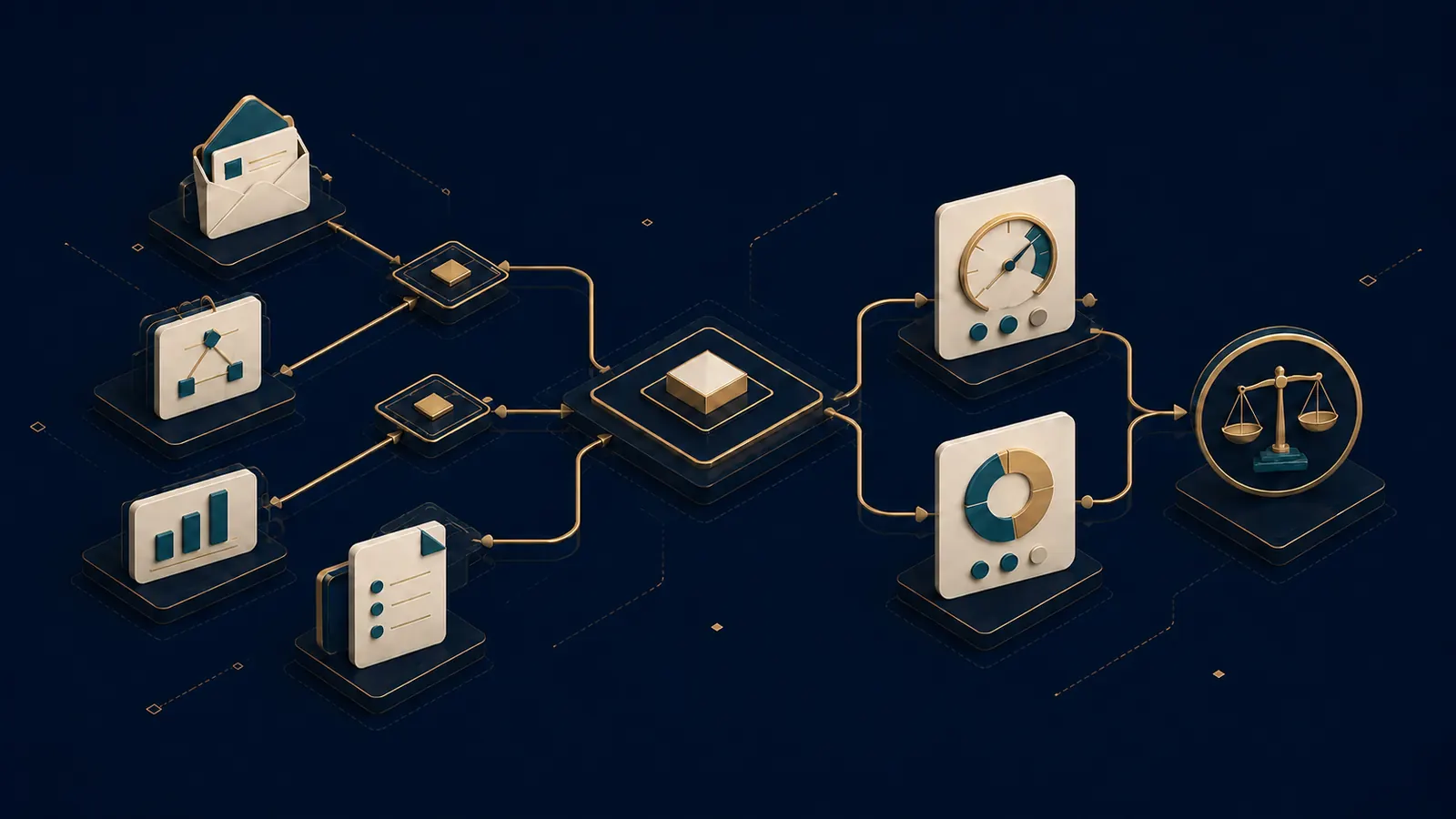
AI workflow automation is worth pursuing when a process is repeated, its inputs can be accessed reliably, and you can define what a correct outcome looks like. Start with rules and measurements, then add AI only where language or ambiguity needs interpretation. If a mistake has material consequences, keep an accountable person in the approval path.
For a US team evaluating a first paid implementation, the buying question is whether a candidate workflow has a bounded scope, a reliable system of record, and an accountable owner. Use this scorecard to decide whether to configure a platform, build a small service, or defer the work. If you need a broader implementation conversation, see AI automation consulting.
Deterministic automation and AI-assisted automation are different jobs
This guide uses an editorial model, not a legal taxonomy. Deterministic automation follows explicit rules: when a valid form arrives, create a record; when a mandatory field is missing, route it to a queue. Given the same valid inputs and connected systems, the prescribed path should be predictable.
AI-assisted automation adds a model step for work that is less structured: classifying a request, extracting a topic from an email, drafting a response, or choosing among carefully limited tools. Zapier’s current documentation distinguishes deterministic steps from agentic steps that can reason and act, which is useful product language for this practical distinction. Read Zapier’s explanation.
Use deterministic steps for validations, known rules, and irreversible actions. Use AI for ambiguity, language, and unstructured content. That is a reasoned recommendation from the sources below, not a claim that every process needs AI.
Six signs a workflow is ready to automate
- The trigger is visible. A new form, a status change, a received email, or a scheduled report starts the work.
- The process happens often enough to observe. Frequency creates enough repetitions to test whether the workflow is worth maintaining.
- The current path is stable enough to describe. Write the normal route and the exceptions before drawing any automation.
- The data is accessible with the right permissions. Confirm the source fields, API or webhook, record ownership, and audit trail.
- A correct result can be checked. Define the record created, queue selected, person notified, or draft produced.
- The cost of a wrong result is understood. A misrouted low-priority request and an incorrect customer-facing action deserve different controls.
NIST recommends documenting intended benefits, scope, data suitability, error costs, third-party components, and production monitoring. Those are useful selection prompts before any build. NIST AI RMF Core.
Use a buyer's scorecard before choosing a tool
Give each criterion a simple low, medium, or high rating. A high score is not automatically good: high error cost or high review need usually means narrower automation and stronger controls.
| Criterion | Commercial decision to make | Safer implication |
|---|---|---|
| Frequency | Does this recur enough to justify operating and support time? | Start with a small recurring bottleneck. |
| Stability | Can the business owner describe the normal path and exceptions? | Use deterministic steps when rules are settled. |
| Data access | Can the workflow read and write only the fields it needs in the system of record? | Use scoped credentials and a named record owner. |
| Error cost | What happens if the route, update, or message is wrong? | Add validation, a hold, or manual approval. |
| Human review | Which operations or revenue owner can override the result, and when? | Put the reviewer before consequential actions. |
| Measurable value | Which baseline and operational outcome will justify the pilot? | Track a named metric after launch. |
For AI-assisted steps, NIST also calls for defined and documented human oversight. Its human-AI interaction appendix is a useful reminder that a review label alone is not a control.
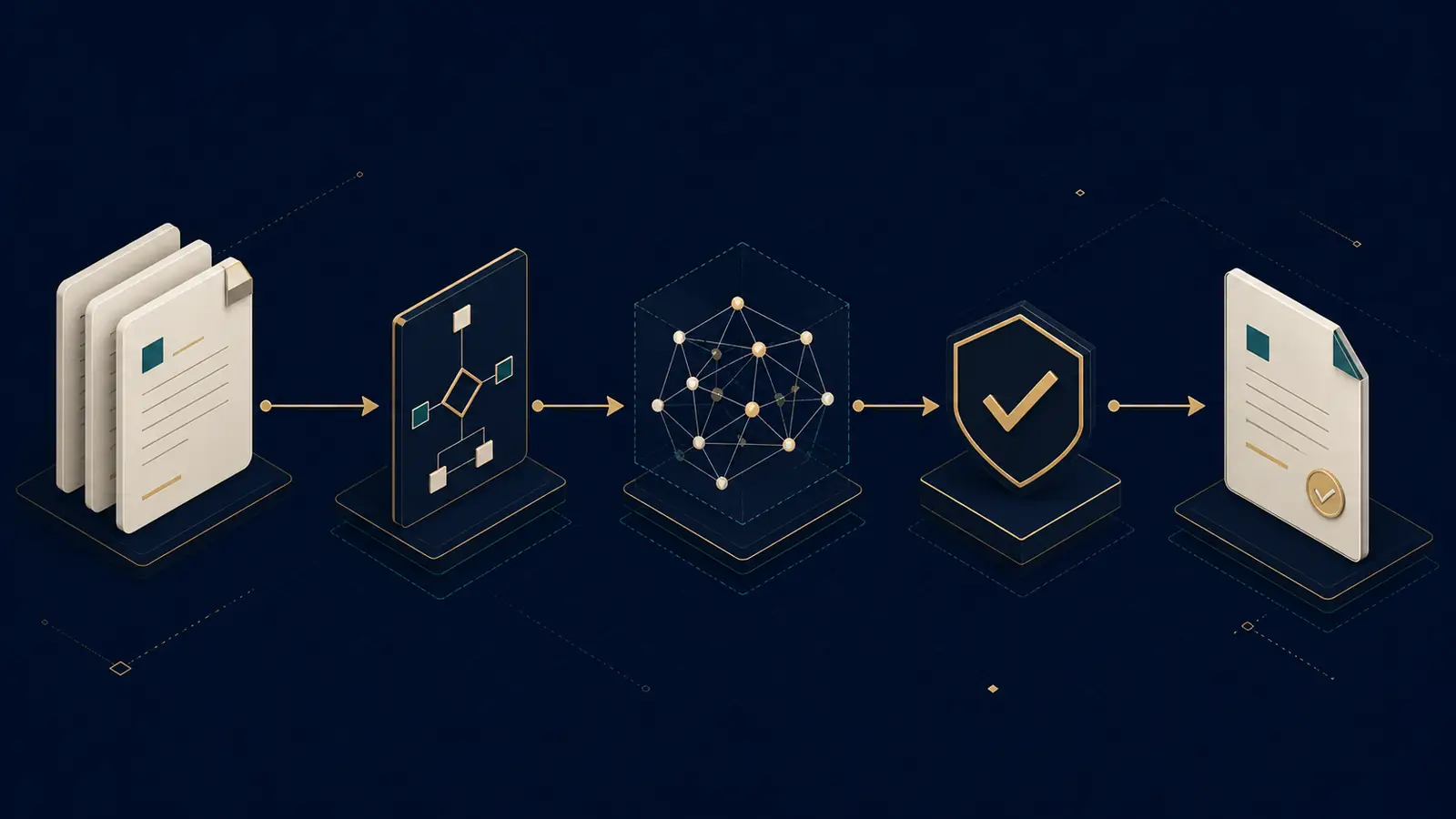
Scope a pilot in seven operational steps
- Name the business owner, the operational trigger, and the system of record.
- Draw the current handoffs, including the most common exception and the team that resolves it.
- Separate deterministic checks such as required fields, permissions, duplicate detection, and status rules from any interpretation work.
- Specify the AI task in one verb: classify, extract, summarize, draft, or recommend. Do not ask a model to decide more than the pilot needs.
- Define the reviewer, escalation route, and stop condition before any consequential write or customer-facing action.
- Agree on a baseline and one or two operating measures, such as response time, queue age, review rate, or correction rate.
- Run a limited pilot with a named owner, inspect exceptions, then decide whether to extend, narrow, or retire it.
Illustrative scenario: qualify website demo requests before a sales handoff
This is an illustrative scenario, not a client result. A US company's website form receives demo requests. A deterministic step checks required fields, duplicates, and the CRM record. An AI step extracts the stated use case and suggests a routing category from the free-text response. A sales operations coordinator reviews high-value or ambiguous requests before assignment. The team can measure time to qualified review and the share of categories that required correction.
The scenario is deliberately modest. It keeps the CRM as the system of record, gives sales operations a decision point, and produces a measurable pilot before broader automation is considered.
Choose the delivery approach after the workflow is clear
| Option | A good fit | Watch for |
|---|---|---|
| n8n | You need workflow nodes, AI steps, error handling, or a code extension point. | Confirm deployment, credentials, and operational ownership. n8n's AI tutorial, error-handling guide, and Code node documentation describe these capabilities. |
| Make | Your operations team wants visual scenarios and agent tools with a visible decision flow. | Product capabilities evolve, so test the exact scenario, connected accounts, and permissions. Make AI Agents. |
| Zapier | Your existing business stack already uses the applications you need to connect and the team needs a low-friction handoff. | Configure each AI tool narrowly and review write actions. Zapier documents tool configuration and approvals in AI by Zapier. |
| A script or service | You need a source-controlled service, integration tests, custom API behavior, or an internal approval service. | Budget for deployment, monitoring, and an owner. |
| No automation yet | The process is rare, changing, inaccessible, or too risky to constrain. | Document it manually and revisit after the process stabilizes. |
There is no universal winner. Tool choice follows the process, the connected systems, the controls, and the people who will maintain it. For help building the first version side by side, explore AI coaching. If the process calls for a scoped implementation, start with custom AI projects.
Privacy, security, and operating controls for a US team
Treat privacy as a design input, not a post-launch checklist. The voluntary NIST Privacy Framework offers a way to identify and manage privacy risk. It does not replace review of sector rules, state requirements, contracts, or your own counsel.
- Record the purpose, data categories, connected accounts, recipients, retention expectations, and safeguards before sending data through an AI or automation service.
- Give the workflow only the permissions and fields it needs. Do not reuse a broad administrator connection for convenience.
- Name an owner for the workflow, its credentials, data decisions, and runbook.
- Define the failure path: retry, alert, queue, rollback where possible, and a human decision for exceptions. For AI steps, preserve the documented oversight called for in NIST's human-AI interaction guidance.
- Keep an audit trail appropriate to the process, including the input reference, action, reviewer, and correction where applicable.
- Review the metric and exception log after launch. A workflow that cannot be observed cannot be safely improved.
FAQ about choosing AI workflow automation
What should a US company automate first?
Start with a frequent operations, revenue, or support process that has clear inputs, a bounded outcome, and a low-cost way to review mistakes. AI is most useful where the process contains language or classification work that cannot be captured by a small set of rules.
Can a CRM workflow use AI without letting AI make the final decision?
Yes. Keep validation, duplicate detection, and status updates deterministic. Use AI only for a defined interpretation step, such as extracting a stated use case. Route ambiguous or consequential decisions to a named reviewer before the CRM assignment or write action.
What should be included in an automation pilot scope?
Include one workflow, the system of record, the permitted data, the deterministic checks, the AI task if any, the approval path, the exception path, a named owner, and one or two measures. This makes it possible to decide whether the pilot earns expansion.
How do I compare n8n, Make, Zapier, and a custom build?
Compare the workflow's connected systems, operational ownership, error path, credential model, and change process before comparing interfaces. A custom build can be appropriate when you need source control and testable custom behavior; a platform can be appropriate when the workflow is bounded and the team can operate it.
What needs to be budgeted besides implementation?
Budget for the business owner's time, process documentation, connected-account administration, monitoring, exception review, maintenance, and training. If those responsibilities are not funded or assigned, defer the automation until the operating model is clear.
For a practical next step, review your candidate workflow with AI automation consulting, learn the method in AI coaching, or discuss a bounded custom AI project. You can also read our guides to building a personal AI agent, no-code AI automation, and 12 AI automation examples with a business ROI method.
Read next